
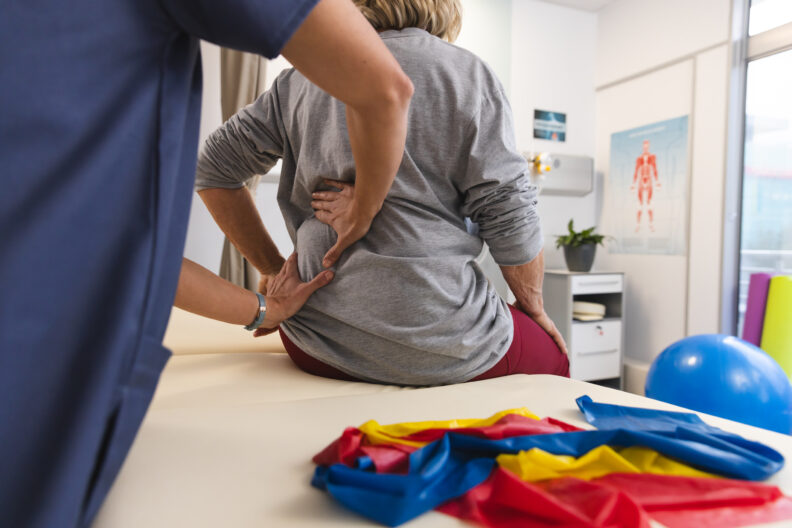
Why Osteoporosis Matters in Pelvic Floor Physical Therapy
Osteoporosis causes bones to become weaker and more vulnerable to fractures. The spine and hips are especially important areas to consider when developing an exercise program.
But what does this have to do with your pelvic floor?
Your pelvic floor works together with your diaphragm, abdominal muscles, back, hips, and glutes to provide support and manage pressure throughout your trunk.
Changes in posture, strength, balance, breathing, and mobility can all influence this system. That’s why pelvic PT isn’t only about the pelvic floor itself.
For someone with osteoporosis, pelvic PT may also address:
- Posture and body mechanics
- Core and hip strength
- Balance and fall prevention
- Breathing and pressure management
- Safe lifting techniques
- Functional movements such as getting out of a chair, bending, or carrying objects
- Pelvic floor symptoms such as urinary leakage, urgency, pelvic pressure, or prolapse
Is Physical Therapy Safe With Osteoporosis?
Yes. Physical therapy is generally safe for people with osteoporosis when the program is designed around the person’s bone health, medical history, fracture risk, strength, balance, and current abilities.
Before progressing exercise, your physical therapist may ask about your history of osteoporosis, previous fractures, falls, pain, medications, and other medical conditions.
Someone with mild bone loss and no history of fracture may have very different exercise needs than someone with severe osteoporosis or previous vertebral compression fractures.
What Modifications Are Made During Pelvic PT?
When providing pelvic PT for osteoporosis safely, your therapist may modify the position, resistance, range of motion, speed, or complexity of an exercise.
1. Spinal Position May Be Modified
Repeated or heavily loaded rounding of the spine may increase fracture risk in some people with osteoporosis, particularly those at higher risk for vertebral fractures. Instead of repeatedly bending through the spine, your therapist may teach you how to use a hip hinge bending through your hips while maintaining a more neutral spinal position.
This strategy can carry over into everyday activities such as picking something up, doing laundry, or reaching into a lower cabinet.
2. Resistance Is Progressed Gradually
Osteoporosis does not automatically mean you cannot lift weights.
Resistance training is an important part of maintaining muscle and bone strength. As you get stronger the pulling of your muscles on bone encourages more bone material to be laid down, therefore making your bones stronger. The goal is to challenge your body appropriately without suddenly asking it to tolerate more than it is prepared for.
3. Twisting May Be Modified
Fast, forceful or loaded twisting movements isn’t appropriate for everyone, especially those with osteoporosis.
Learning to modify these movements by turning your entire body rather than repeatedly twisting through your spine.
4. Balance Training is Mandatory
Falling is a major and valid concern for people with osteoporosis because a fall can result in a fracture.
Your Physical Therapy program will therefore include balance exercises, lower-extremity strengthening, coordination training, and strategies for navigating everyday environments more confidently.
5. Breathing and Pressure Management Are Addressed
Holding your breath while lifting or straining can significantly increase pressure through your abdomen.Your diaphragm, abdominal muscles, and pelvic floor are designed to work together to manage that pressure.Pelvic PT can teach you how to coordinate your breathing with movement and strengthening. For example, you may be taught to exhale during the more difficult portion of an exercise rather than automatically holding your breath and bearing down.
This can be particularly important if you are also experiencing urinary or fecal leakage, pelvic pressure, constipation, or pelvic organ prolapse.
What Exercises Can Be Helpful?
Your individual program will depend on your medical history and fracture risk, but pelvic floor physical therapy for someone with osteoporosis may include:
- Appropriate weight-bearing and weight-shifting activities
- Sit-to-stands
- Squats or modified squats
- Heel raises
- Hip and glute strengthening
- Resistance-band exercises
- Postural strengthening
- Core stabilization
- Balance exercises
- Functional lifting and carrying practice
Your therapist can modify these exercises based on what is appropriate for your body.
What If I’m Afraid to Exercise?
Fear after an osteoporosis diagnosis is understandable. You may have been told to avoid certain movements or simply to “be careful,” without being shown what you can safely do.
Physical therapy can help bridge that gap.Instead of giving you a long list of things you’re not allowed to do, your therapist can teach you safer ways to perform the movements you need in your everyday life.That may mean learning how to get something from the floor, carry groceries, strengthen your legs, improve your balance, or exercise without unnecessarily stressing your spine.
The goal is not just to protect your bones. It’s to help you maintain your independence and confidence in your body.
Looking to optimize your well being with pelvic floor physical therapy? Reach out to us at Pelvic Health Center in Madison, NJ to set up an evaluation and treatment! Feel free to call us at 908-443-9880 or email us at [email protected].