
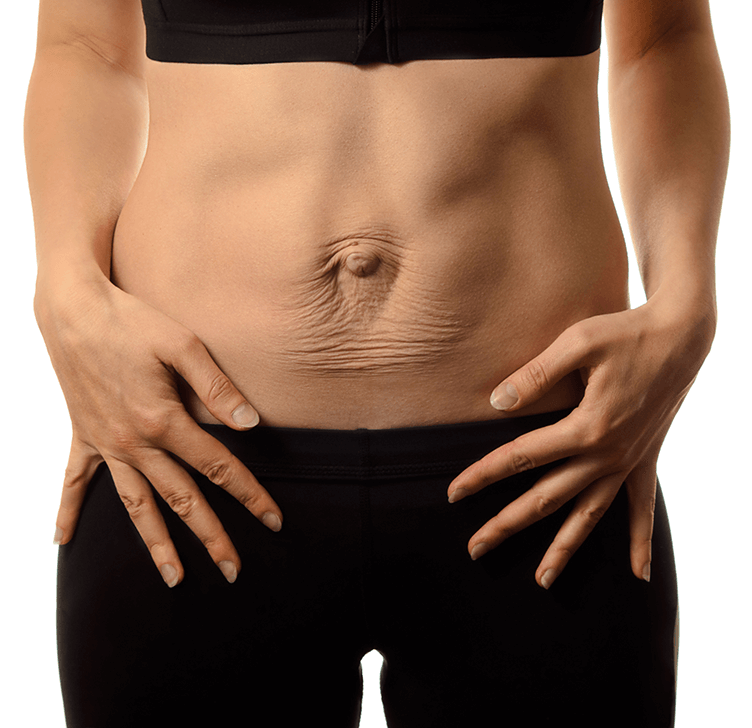
When most people think about diastasis recti—the separation of the abdominal muscles along the midline—they usually think of pregnancy, weak abs, or too much pressure through the core. While those are common causes, one often-overlooked contributor sits higher up in the body: the thoracic spine, the middle section of your back that connects to your ribs.
Here’s how your mid-back could be quietly contributing to that abdominal separation.
The Thoracic Spine Sets the Stage for Core Pressure
Your thoracic spine forms the foundation for your rib cage and diaphragm. When this area becomes stiff or rounded, which is common from sitting or slouching, the rib cage loses its ability to expand and move properly when you breathe. That restriction forces the diaphragm to work harder and less efficiently. As a result, pressure in your core pushes forward and downward, placing extra strain on the abdominal wall. Over time, this unbalanced pressure can create or worsen diastasis recti.
Rounded Shoulders Mean a Stretched Core
When your upper back rounds and your shoulders slump forward, the rib cage collapses toward the pelvis. This posture keeps your “six-pack” muscle, the rectus abdominis, in a constantly lengthened and weakened position. A core that stays stretched out all day loses tension in the connective tissue between the muscles, known as the linea alba. That’s often when you start noticing the telltale bulge or separation down the center of your abdomen.
Breathing Patterns Tie It All Together
Shallow chest breathing and stiff ribs go hand in hand. When your ribs can’t expand outward, your diaphragm doesn’t move the way it’s supposed to. This limits natural support from the deep core muscles and leads to more pressure on the abdominal wall. Restoring mobility through the ribs and thoracic spine helps the diaphragm, abdominals, and pelvic floor coordinate again, allowing the core to function as one connected system.
The Thoracic–Pelvic Connection
The thoracic spine doesn’t work alone. It’s connected through fascia and muscle chains to the pelvis and pelvic floor. When the mid-back gets stuck, the pelvis often compensates by tipping forward or backward. This changes how pressure moves through the abdomen and can add even more strain to the abdominal wall. This is why healing diastasis recti isn’t just about core exercises—it’s about restoring whole-body alignment and movement patterns.
How Pelvic Floor Physical Therapy Can Help
A pelvic floor physical therapist looks at how your rib cage, spine, breathing, and pelvis all interact. Treatment often includes improving thoracic mobility, retraining diaphragmatic breathing, and restoring coordination between the deep core and pelvic floor. Postural corrections help relieve pressure on the abdominal wall so the tissues can heal and strengthen naturally.
When your thoracic spine moves the way it should, your core can finally do its job—supporting your body with balance, stability, and strength.
The Takeaway
Diastasis recti isn’t just about your stomach muscles. It’s about how your whole body functions together. The thoracic spine, diaphragm, and pelvis are deeply connected. If you’ve been working on your core and not seeing progress, improving your mid-back mobility might be the missing link in your recovery.
Looking to improve your DRA with pelvic floor physical therapy? Reach out to us at Pelvic Health Center in Madison, NJ to set up an evaluation and treatment! Feel free to call us at 908-443-9880 or email us at [email protected].